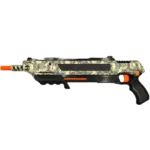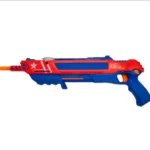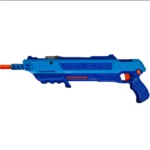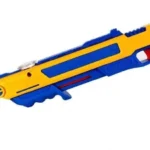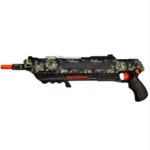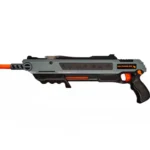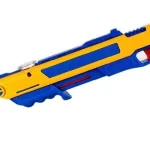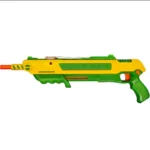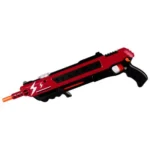
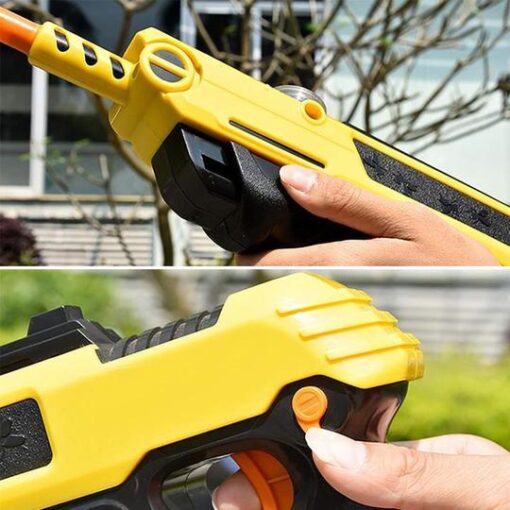
Flies entering your home can be more than a minor annoyance. They can interrupt meals, land on kitchen surfaces, and become particularly frustrating during warmer weather. While traditional fly sprays, sticky traps, and electric fly swatters remain popular options, salt guns offer another way to tackle individual flying insects.
A salt gun is a reusable device that uses ordinary table salt to target flies without relying on conventional insecticide sprays. However, not every model offers the same features, ease of use, or maintenance requirements.
For Irish homeowners, choosing the right salt gun means considering more than its appearance or price. You should also evaluate its operating mechanism, accuracy, safety features, build quality, and suitability for your home.
This buyer’s guide explains what to look for before purchasing a salt gun, helping you make an informed decision based on your needs and budget.
1. Understand How a Salt Gun Works
Before comparing products, it helps to understand the basic mechanism.
A salt gun is a handheld device that propels a small quantity of salt towards a targeted insect. Many manual models use a spring-powered or mechanical mechanism, while some products may have different operating systems. The precise mechanism depends on the model.
To use one, you typically load the recommended salt, prepare the mechanism according to the manufacturer’s instructions, aim at an individual fly, and fire.
Salt guns are generally designed for short-range targeting rather than controlling large numbers of insects at once. Their effectiveness depends on factors such as distance, aim, insect position, and the particular product.
Unlike insecticide aerosols, a salt gun does not disperse conventional chemical insecticides. However, this does not make it completely risk-free: discharged salt can injure eyes, affect delicate surfaces, or contaminate nearby food.
Buying tip: Check the manufacturer’s stated effective range and operating instructions before choosing a model. Avoid relying on performance claims that are not supported by clear product specifications.
2. Consider Your Main Purpose
The best salt gun for you depends on where and how you intend to use it.
For Occasional Flies Indoors
If you occasionally notice a fly in your living room, conservatory, or utility room, a compact salt gun may be sufficient. Look for a comfortable grip, straightforward loading, and easy-to-follow instructions.
Make sure you have a clear line of sight and enough room to use the device safely. Avoid firing near exposed food, people, pets, windows, televisions, or fragile decorations.
For Kitchens and Dining Areas
Kitchens require additional care because food preparation surfaces and utensils must remain clean. A salt gun may help target an isolated fly, but you should never fire it towards uncovered food or dishes.
If your kitchen has limited space, consider whether an electric fly swatter or a suitable fly trap would be a more practical alternative.
For Patios, Garages, and Conservatories
Irish homeowners may also encounter flies around patios, garages, sheds, and conservatories. A portable salt gun can be convenient in these settings, provided the area is dry and the device is suitable for the intended environment.
For persistent fly activity, however, prevention and traps may be more effective than repeatedly targeting individual insects.
3. Check the Key Features Before Buying
Product specifications can make a significant difference to your experience. Compare the following features before making a purchase.
Effective Range and Accuracy
Range is one of the most important considerations. A device designed for short-distance use may be unsuitable if you expect to target flies from across a large room.
Look for a clearly stated effective range rather than a vague maximum-distance claim. Accuracy also depends on your technique, the fly’s position, and the surrounding environment.
Loading Mechanism
A straightforward loading system makes a device easier to use and maintain. Check whether the salt reservoir is easy to access and whether the manufacturer specifies ordinary fine or granulated table salt.
Using damp, coarse, flavoured, or otherwise unsuitable salt may affect performance or cause blockages, depending on the model.
Build Quality
Look for a sturdy body, a comfortable grip, and a mechanism that operates consistently. Review the product description for information about materials and construction.
A well-designed device should be easy to handle without requiring excessive force. Avoid products with unclear instructions or no identifiable manufacturer or seller support.
Safety Features
Safety should be a priority, particularly in households with children or pets. Check whether the product has a safety mechanism, clear operating instructions, and guidance on storage.
Remember that a safety feature does not replace careful handling. A salt gun should never be treated as a toy or pointed towards people or animals.
Maintenance Requirements
Find out whether the device needs regular cleaning, whether unused salt should be removed after use, and how to deal with blockages.
A model that is easy to maintain may be more convenient over time than one with complicated cleaning requirements.
4. Compare Price With Overall Value
Price is important, but the cheapest salt gun is not necessarily the best choice.
When comparing options, consider the complete cost of ownership rather than the initial purchase price alone.
- Initial cost: Does the price match the device’s construction and features?
- Running costs: Does the model require only the recommended household salt, or are there additional consumables?
- Maintenance: Are cleaning and routine care straightforward?
- Warranty: Is warranty coverage clearly explained?
- Customer support: Can you contact the seller if the device arrives damaged or develops a fault?
- Replacement parts: Are relevant parts available if repairs become necessary?
Because many manual salt guns do not require batteries, their ongoing operating costs can be relatively low. Nevertheless, the exact costs and maintenance needs vary by product.
Compare the specifications and terms of sale carefully instead of choosing based on discounts alone.
5. Check Delivery and Seller Reliability in Ireland
When shopping online in Ireland, the seller matters almost as much as the product.
Start by confirming that delivery is available to your address. Check the estimated dispatch time, delivery charges, tracking arrangements, and the process for handling damaged or incorrect orders.
You should also read the returns policy and warranty conditions before purchasing. If a product is being sold as suitable for indoor use, check that the manufacturer explicitly supports that application.
SaltGun.ie is one brand Irish shoppers may consider when researching salt-powered fly-control products. Before ordering, review the available product details, safety instructions, shipping information, and applicable return terms.
Practical tip: Keep your order confirmation and product documentation. These can be useful if you need customer support or want to make a warranty claim.
6. Choose the Right Salt Type
Salt guns are designed to work with specific types of salt, so always check the manufacturer’s recommendations before loading the device.
Many models use ordinary, dry, granulated table salt. Damp or clumped salt may interfere with the firing mechanism, while coarse crystals may not work correctly in some devices.
For the best results:
- Use only the salt recommended for your model.
- Keep the salt supply in a dry, sealed container.
- Never experiment with alternative powders or substances.
- Follow the manufacturer’s loading instructions to prevent blockages.
Irish weather can be damp, particularly during autumn and winter, so storing both the salt and the device in a dry location is especially important.
7. Understand Safety and Responsible Storage
Although a salt gun uses salt rather than conventional insecticide, it should still be handled responsibly. Salt discharged at close range can injure eyes, and careless use may damage delicate objects.
Before purchasing, make sure you understand the safety precautions.
Keep it away from children: Store the device unloaded, securely, and out of children’s reach.
Protect people and pets: Never aim at people, animals, faces, or eyes.
Avoid sensitive surfaces: Do not fire towards glass, electronics, polished furniture, or other objects that could be damaged.
Keep food protected: Never fire towards exposed food, utensils, or food preparation surfaces.
Follow cleaning instructions: Keep the mechanism dry and perform maintenance only as directed by the manufacturer.
If you have young children, pets, limited indoor space, or frequent insect problems, consider whether a different fly-control method would be more appropriate.
8. Salt Gun vs Other Fly-Control Options
Before deciding on a salt gun, compare it with other common solutions.
| Feature | Salt Gun | Electric Fly Swatter | Fly Trap |
| Operation | Targets individual insects | Kills on direct contact | Attracts or catches insects |
| Power | Usually no batteries | Depends on model | Depends on model |
| Best suited to | Occasional individual flies | Reachable flying insects | Ongoing monitoring or capture |
| Maintenance | Salt loading and cleaning | Battery care and cleaning | Emptying or replacing traps |
| Main consideration | Aiming and salt residue | Electrical safety | Effectiveness varies by trap type |
A salt gun may suit you if you want a reusable tool for occasional flies. An electric swatter can be more practical when you prefer direct contact, while a suitable fly trap may be better for recurring insect activity.
If flies keep appearing in large numbers, identify the source rather than relying solely on any handheld device.
9. A Simple Buyer’s Checklist
Before ordering a salt gun in Ireland, use this checklist to compare your options.
- The model is suitable for my intended indoor or outdoor use.
- The effective range is clearly stated.
- Loading and operation are straightforward.
- The manufacturer specifies the correct type of salt.
- Safety instructions and storage guidance are available.
- The construction appears durable and comfortable to handle.
- Cleaning and maintenance requirements are manageable.
- Delivery costs and estimated delivery times are clear.
- Warranty coverage and return terms are available.
- The seller provides reliable contact details and customer support.
Irish consumers buying online also have legal protections. For most online purchases, a 14-day cancellation period applies, subject to exceptions. Faulty goods may qualify for repair, replacement, or a refund under applicable consumer law. Check the Competition and Consumer Protection Commission’s guidance before ordering.
Conclusion
Choosing the right salt gun comes down to understanding your needs and comparing the features that matter most. Range, accuracy, loading convenience, build quality, maintenance, and safety should all influence your decision.
For Irish homeowners, it is equally important to check delivery arrangements, customer support, and consumer rights before buying online. A little research can help you avoid unsuitable products and choose a device that fits your household.
If you’re considering a salt-powered fly killer, use this guide to compare available options, including those from SaltGun.ie, and prioritise practical performance over marketing claims. Finally, remember that the most effective fly-control strategy combines a suitable device with good household hygiene and prevention. By keeping food covered, managing waste, and limiting insect entry, you can make your home less attractive to flies throughout the year.
Frequently Asked Questions (FAQs)
The best option is one with clear safety instructions, a reliable loading mechanism, suitable range, durable construction, and manageable maintenance requirements. Your choice should reflect the size of your home and how often you encounter flies.
Some models are designed for indoor use, but you should verify this with the manufacturer. Use them only in clear areas, away from exposed food, people, pets, electronics, and fragile surfaces.
Use the type specified by the manufacturer. Many models use ordinary dry table salt, but grain size and other requirements may differ between devices.
Many manual salt guns operate mechanically and do not need batteries. However, check the specifications of the particular model before purchasing.
They should not be considered toys or completely risk-free. Discharged salt can injure eyes, and the device should never be aimed at people or animals. Store it unloaded and securely out of reach.
Follow the manufacturer’s instructions for cleaning, removing unused salt, and preventing blockages. Keep the device dry, store salt in a sealed container, and avoid dismantling the mechanism unless instructed.
A salt gun can help deal with individual flies, but it will not resolve the source of a significant infestation. Improve sanitation, cover bins, seal entry points, and investigate potential breeding sources if flies keep returning.
You can research specialist retailers such as SaltGun.ie and compare their available products, delivery terms, safety instructions, and after-sales support. Confirm the current stock and full cost before placing an order.