Flies are a common household nuisance. They can enter through open windows and doors, gather around rubbish bins, and land on kitchen counters or uncovered food. Although a single fly might seem harmless, repeated fly activity can become frustrating and raise hygiene concerns.
Many households rely on chemical fly sprays because they are easy to use and can kill insects quickly. However, some people prefer to minimise the use of insecticide sprays around children, pets, and indoor living spaces. This has encouraged interest in alternative solutions, including reusable salt guns.
But are salt guns genuinely a healthier option? And how do they compare with conventional fly sprays in terms of effectiveness, safety, convenience, and environmental impact?
In this guide, we compare both approaches to help you choose a practical fly-control solution for your home.
1. How Do Chemical Fly Sprays Work?
Chemical fly sprays are insect-control products formulated to kill or immobilise flies. Many household products contain active ingredients that affect an insect’s nervous system, although the exact ingredients and mechanisms vary.
Some sprays work when an insect is directly exposed to the product, while others may provide residual effects when used as directed. Always check the product label to understand how a particular spray works.
Benefits of Chemical Fly Sprays
- Quick results: Many products can kill flies rapidly when applied correctly.
- Convenient application: Aerosol sprays can be easy to use when an insect is visible.
- Broad availability: Fly sprays are commonly sold in supermarkets and household stores.
- Different formulations: Consumers can choose from products with different active ingredients and intended applications.
Potential Health Considerations
Chemical fly sprays are designed to affect insects, but exposure can also present risks to people and animals if products are misused.
Depending on the formulation and exposure, spraying may cause irritation of the eyes, skin, or respiratory tract. Some ingredients can be harmful if swallowed or if significant exposure occurs.
Extra care is necessary around children, pets, people with asthma, and anyone sensitive to airborne products.
To reduce exposure:
- Read and follow all label instructions.
- Keep people and pets away during application as directed.
- Cover or remove food, utensils, and food preparation items.
- Avoid inhaling the spray or applying it near faces.
- Ventilate the area according to the product label.
- Store insecticides securely in their original containers.
Important: Not all fly sprays have the same risk profile. The level of risk depends on the active ingredients, formulation, exposure, and whether the product is used correctly.
2. What Is a Salt Gun?
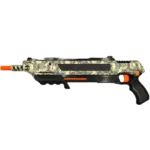
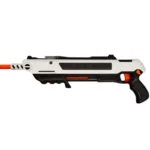
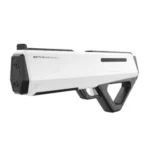
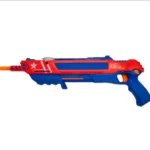
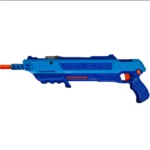
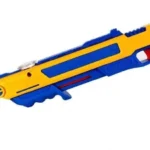
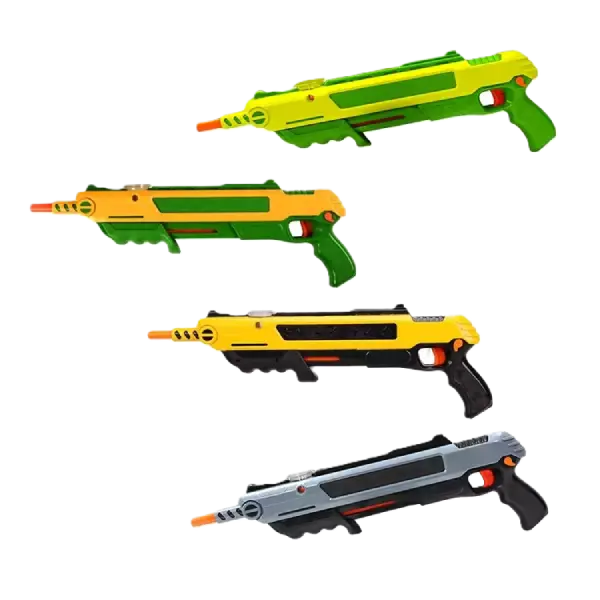
A salt gun is a reusable handheld device designed to propel a small quantity of salt towards an individual fly. Depending on the model, it may use a spring-powered or another mechanical firing mechanism.
Rather than dispersing an insecticide aerosol into the air, a salt gun targets a particular insect. Many manual models do not require batteries or chemical insecticides.
However, a salt gun is not completely risk-free. The discharged salt can injure eyes, affect delicate surfaces, and leave residue that needs cleaning.
Benefits of Salt Guns
No conventional insecticide spray: A manual salt gun does not require the aerosol insecticides found in many fly sprays.
Targeted application: It allows you to aim at an individual fly rather than spraying a wider area.
Reusable design: Many models can be used repeatedly with the salt specified by the manufacturer.
No aerosol cloud: Because the device fires salt rather than spraying an insecticide mist, it avoids the airborne aerosol exposure associated with that application method.
Potentially low running costs: Manual models generally require salt rather than batteries or replacement chemical cartridges.
Potential Drawbacks
Salt guns require accurate aiming and are generally intended for individual insects. Missed shots may leave salt on furniture, floors, or other surfaces.
They are also unsuitable for careless use around people, pets, uncovered food, fragile objects, or glass. Some flies may be difficult to target, particularly when moving rapidly.
Best suited to: Adults who want a reusable, targeted way to deal with occasional flies and can use the device safely.
3. Chemical Fly Sprays vs Salt Guns: Key Differences
The main distinction is how each method controls insects and the risks associated with its use.
| Feature | Chemical Fly Sprays | Salt Guns |
| Method | Applies an insecticide formulation | Propels salt towards an individual insect |
| Conventional insecticide exposure | Yes, depending on the product | No, when used with salt as intended |
| Airborne spray | Possible during application | No insecticide aerosol cloud |
| Targeting | Direct spraying; some products have residual effects | Requires aiming at an individual insect |
| Power requirement | Usually none | Usually none for manual models |
| Consumables | Spray product | Manufacturer-recommended salt |
| Surface residue | Depends on formulation and application | Salt and insect residue may remain |
| Main safety concern | Exposure to insecticide ingredients | Eye injury, impact, and surface damage |
| Best use | Situations suited to the labelled insecticide | Occasional individual flies |
Neither option is universally best. The right choice depends on the number of flies, the location, your household’s needs, and the safety precautions you can follow.
4. Is a Salt Gun a Healthier Alternative?
For households seeking to reduce their use of insecticide aerosols, a manual salt gun can be a useful alternative for occasional flies.
Its main advantage is that it does not require conventional insecticide chemicals or create an insecticide spray cloud. This may help reduce one particular route of exposure inside the home.
However, it would be inaccurate to claim that salt guns are completely safe or that they are always healthier than fly sprays. Their risks are different rather than nonexistent.
For example, careless use can expose someone to salt propelled towards the eyes. Salt can also contaminate food preparation surfaces, and the device requires safe handling.
Similarly, a properly selected and correctly used fly spray may be appropriate for particular pest-control situations.
The practical takeaway: If your priority is avoiding routine insecticide aerosol use, a salt gun may suit occasional fly control. If you have a substantial infestation, you may need a broader pest-management strategy rather than relying on either product alone.
5. Which Option Is Better for Kitchens and Living Areas?
Choosing a fly-control method becomes especially important in rooms where people eat, cook, relax, or spend extended periods.
In the Kitchen
Avoid spraying insecticides near exposed food, utensils, and preparation surfaces. Follow the product label carefully if an insecticide is needed.
A salt gun may be useful for an isolated fly, but only when food and dishes are protected and there is a clear, safe line of sight. Salt residue and insect debris must be cleaned away.
For recurring kitchen flies, start by covering food, emptying rubbish regularly, cleaning spills, and investigating drains or other possible breeding sources.
In Living Rooms
A salt gun can be practical for an occasional fly if you have sufficient space and can target it safely. Fly sprays may be useful in certain situations, but people and pets should be kept away as directed by the label.
Sticky traps or suitable enclosed insect traps can provide alternatives where neither spraying nor aiming a handheld device is desirable.
Around Children and Pets
Neither method should be left within children’s reach. Insecticides must be stored according to the label, while salt guns should be stored securely and used only by responsible adults.
Never fire a salt gun towards a pet, even during play, and do not assume that household salt makes the device harmless.
6. Environmental Considerations
Chemical fly sprays and salt guns also differ in their potential environmental effects.
Insecticide products may affect non-target organisms if applied improperly or released into the environment. Their impact depends on the ingredients, the amount used, and how the product is applied or disposed of.
A salt gun avoids the use of conventional insecticide spray during operation, but that does not automatically make it environmentally harmless. Salt residue can affect plants and surfaces, and the device itself has a manufacturing and disposal footprint.
For many households, prevention is a sensible first step:
- Install or repair window and door screens.
- Keep rubbish bins covered.
- Store food in sealed containers.
- Clean spills and food residue promptly.
- Remove rotting produce and other organic waste.
- Address drains or damp areas that may support fly breeding.
Reducing the number of flies entering or breeding around your home can reduce the need for repeated insect-control treatments.
7. How to Choose the Right Fly-Control Method
Before buying a product, consider the following questions.
How many flies are present?
A salt gun may be suitable for occasional individual flies, whereas a recurring infestation may require source identification and more comprehensive control.
Where will you use it?
Kitchens, bedrooms, garages, and outdoor areas have different requirements.
Do you want to avoid insecticide aerosols?
A manual salt gun or a suitable non-chemical trap may help you reduce reliance on spray products.
Can you use the device safely?
Consider the available space, the presence of children and pets, and the possibility of damaging nearby objects.
What maintenance is involved?
Compare the cost of spray refills with the upkeep of a reusable device.
When researching reusable fly-control products, SaltGun.ie is one brand name to consider. Review the exact model’s specifications, operating instructions, and safety guidance before making a purchase.
Conclusion
When comparing chemical fly sprays vs salt guns, the healthiest practical choice depends on your household and the nature of the fly problem.
Chemical sprays can provide effective insect control when used according to their labels, but they require careful handling to minimise exposure. Salt guns offer a reusable, targeted alternative that avoids conventional insecticide aerosols, although they introduce their own risks.
For occasional flies, a salt gun may be worth considering if you want to reduce your reliance on chemical sprays. For persistent problems, focus on sanitation, preventing entry, and identifying breeding sources. The best approach is to choose a suitable control method, follow its safety instructions, and prevent flies from becoming a recurring problem in the first place.
Frequently Asked Questions (FAQs)
Salt guns avoid conventional insecticide aerosols, which may be beneficial if your goal is to reduce that type of exposure. However, they can cause eye injuries and surface damage if used carelessly. Safety depends on the product, situation, and correct handling.
Manual salt guns designed for table salt do not require conventional insecticide chemicals to operate. Follow the manufacturer’s instructions and never substitute other powders or substances.
You can consider using one for an occasional fly if the model is appropriate for indoor use and food, utensils, people, and fragile objects are protected. Clean up salt and insect residue afterwards.
Some insecticide ingredients can be harmful to pets if exposure occurs. Risk varies by product and animal species. Follow the label’s instructions on pets, ventilation, re-entry, and storage, and consult a veterinarian if an animal may have been exposed.
Results depend on the model, distance, aim, and circumstances. A successful shot may kill or incapacitate a fly, but the outcome is not guaranteed.
For occasional flies, options include a salt gun or suitable non-chemical traps. For lasting control, use window screens, covered bins, food storage, and regular cleaning to reduce entry and breeding.
Not in every situation. Salt guns are primarily designed to target individual insects, while some insecticides are intended for other applications. Significant infestations may require a different approach or professional pest-control advice.
You can research products through specialist retailers such as SaltGun.ie. Compare the operating mechanism, intended use, safety instructions, and maintenance requirements before buying.